International expansion looks like a growth decision. In reality, it is an operating-model decision—and one of the fastest ways to discover whether your company can scale beyond its founders.
When we started expanding Soly internationally, we had built a strong position in the Netherlands. The home market was becoming more competitive and increasingly mature. We saw a much larger opportunity beyond our borders: the same mission, the same energy transition and millions of households still waiting for a better proposition.
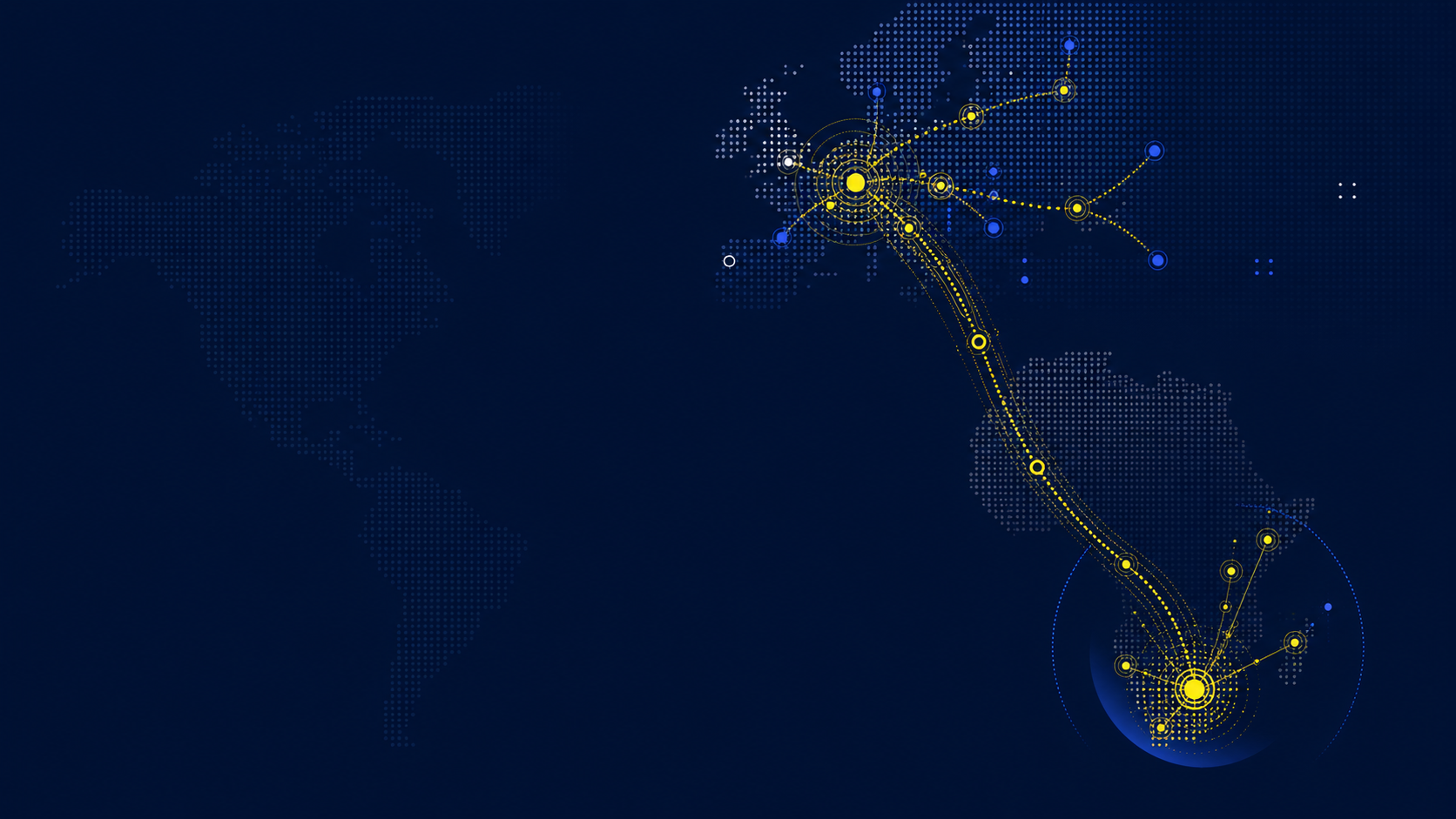
The ambition was clear: move early, learn fast and build a European clean-energy company. Over the journey, Soly expanded across 10 markets on two continents. I remain proud of the teams who made that possible. But pride and hindsight can exist at the same time. International growth created enormous opportunity—and exposed weaknesses in leadership, governance, capital allocation and control much faster than a single-market company ever could.
The first market created the wrong kind of confidence
Belgium became our first real expansion template. We prepared the market carefully: customer research, competitor analysis, regulation, pricing, mystery shopping, legal structure and a 100-day roadmap from landing to first revenue. I temporarily moved to Antwerp and acted as the flying founder—opening doors, making decisions and translating the Soly way of working into a new market.
It worked. We built momentum, found customers and proved that the proposition could travel. But success created a dangerous assumption: if I could personally open Belgium, perhaps I could repeat that playbook everywhere.
I could not. No founder can build ten companies at the same time. What works as founder energy in market one becomes a bottleneck in markets three, five and seven. The challenge was no longer opening a country. It was building a system in which other people could open, adapt and lead a country without waiting for me.
What we changed
1. Hire builders—not just managers
A new market is a start-up inside a scale-up. The first local leader needs to sell, recruit, solve operational problems, build partnerships and make decisions with incomplete information. A strong manager of an established operation is not automatically a strong zero-to-one builder.
We learned to look for people who could work with structure without needing certainty: commercially sharp, culturally curious and comfortable owning the whole market. The best country leaders were not translators of headquarters. They were entrepreneurs who understood the mission and could make it locally relevant.
2. Standardise the backbone, localise the proposition
Every market wanted to be different—and every headquarters wants every market to be the same. Neither extreme works. Technology, reporting, finance, brand principles, governance and core processes should be shared wherever possible. Customer proposition, channel mix, pricing, partnerships and parts of operations must respond to local reality.
Germany did not behave like Belgium. South Africa did not behave like the Netherlands. Regulation, customer trust, financing, installation capacity and buying behaviour varied widely. The goal was not to copy the Dutch business. It was to reuse the strongest parts of the platform while earning product-market fit again in every country.
3. Treat the first €150,000 as a test—not a commitment
We began opening markets lean, initially committing around €150,000 and increasing investment only when the market reached clear milestones. That discipline mattered. A compelling market size slide can justify almost any expansion on paper; customer behaviour is the only proof that counts.
The first capital should buy learning: can we acquire customers at an acceptable cost, deliver the product reliably, collect cash and create repeatable demand? Only then should the organisation add fixed costs. Expansion capital must follow evidence—not enthusiasm, sunk cost or internal politics.
4. Give local teams ownership, but never remove visibility
Letting go was personally difficult. Founders carry a clear picture of the brand, product and pace. Delegating that picture can feel like losing quality or control. But keeping every decision close to the founder slows the company and weakens local leadership.
The answer is not less accountability. It is better accountability: a small set of comparable KPIs, transparent cash forecasts, clear decision rights and a regular operating rhythm. Local leaders need room to act; founders and boards need enough visibility to intervene before a problem becomes structural.
5. Build one company—not a collection of countries
As the number of markets grew, so did the temptation to create independent country organisations. That gives speed at first, but it can also duplicate cost, fragment data and create multiple versions of the truth. We moved toward a more hybrid model: global support functions and technology, combined with regional commercial and operational ownership.
The principle is simple: centralise what creates leverage, localise what creates customer value. Finance, FP&A, product, technology and shared knowledge should strengthen every market. Sales execution, partnerships and operational choices should remain close enough to the customer.
6. Decide in advance when to stop
Founders are trained to persist. In international expansion, persistence without explicit stop rules can become expensive. Opening a market is visible and energising; closing or downsizing one can feel like failure. That asymmetry delays difficult decisions.
Every market needs a time-bound path to traction, contribution margin and ultimately profitability. If the evidence does not improve, the company must adapt, pause or exit. A market is not strategically important simply because the company has already invested in it.
The lesson behind all six lessons
International expansion magnifies whatever already exists. A strong culture becomes a network of empowered teams. Weak reporting becomes delayed surprises. A clear proposition becomes a repeatable platform. Unclear governance becomes slower decisions at a moment when speed and discipline are both essential.
In hindsight, our ambition sometimes moved faster than the organisation beneath it. Presence in a country is not the same as product-market fit. Revenue is not the same as healthy unit economics. Funding is not the same as resilience. And ten open markets are not automatically stronger than four markets with real depth.
That does not diminish what the Solyans achieved. Building local teams, adapting the proposition and serving customers across countries required exceptional resilience, ambition and grit. It does change how I now judge international growth: not by flags on a map, but by the quality and controllability of the company created underneath them.
The framework I use with founders today
Before opening another market, I now ask six questions:
- Is the home-market engine truly repeatable? Expansion should export strength, not distract from unresolved weaknesses.
- Which parts of the model are global—and which must be rediscovered locally? Make that distinction explicit before launching.
- Who is the local builder? Ownership cannot sit permanently with a founder flying between markets.
- What evidence unlocks the next euro? Define milestones, reporting and stop rules before emotion and sunk cost take over.
- Can headquarters support another market without losing control? Test finance, data, governance, product and leadership capacity.
- Does expansion make the company stronger? More markets should create learning, leverage and resilience—not only complexity.
International expansion remains one of the most exciting things a founder can do. It forces the organisation to learn, gives talented people the opportunity to build and can multiply the impact of a mission. But speed must be matched by sequencing. Trust must be supported by data. Ambition must be protected by cash discipline and governance.
That is the lesson I carry forward from building Soly across markets: go global with conviction—but earn the right to scale, one market and one milestone at a time.
Patrick van der Meulen
Founder & Operating Partner