A strong mission can start a company, attract exceptional people and keep an organisation moving when the road gets difficult. But mission creates lasting impact only when it is translated into customer value, commercial strength and disciplined execution.
The 28th of June has always been a special date for me.
When my brother Milan and I were young, we watched Al Gore's documentary An Inconvenient Truth. It made the climate crisis tangible and showed why the world needed to move away from fossil fuels toward renewable energy. More importantly, it planted an idea: perhaps our entrepreneurial energy could be used as a force for good.
On 28 June 2013, only hours after graduating from Hanze, we went to the notary and started the company that would become Soly. The mission was bold—make solar energy accessible to everyone. The budget was not. We began with €2,000 left from our study budget and bootstrapped the company for nine years before raising our first external investment round.
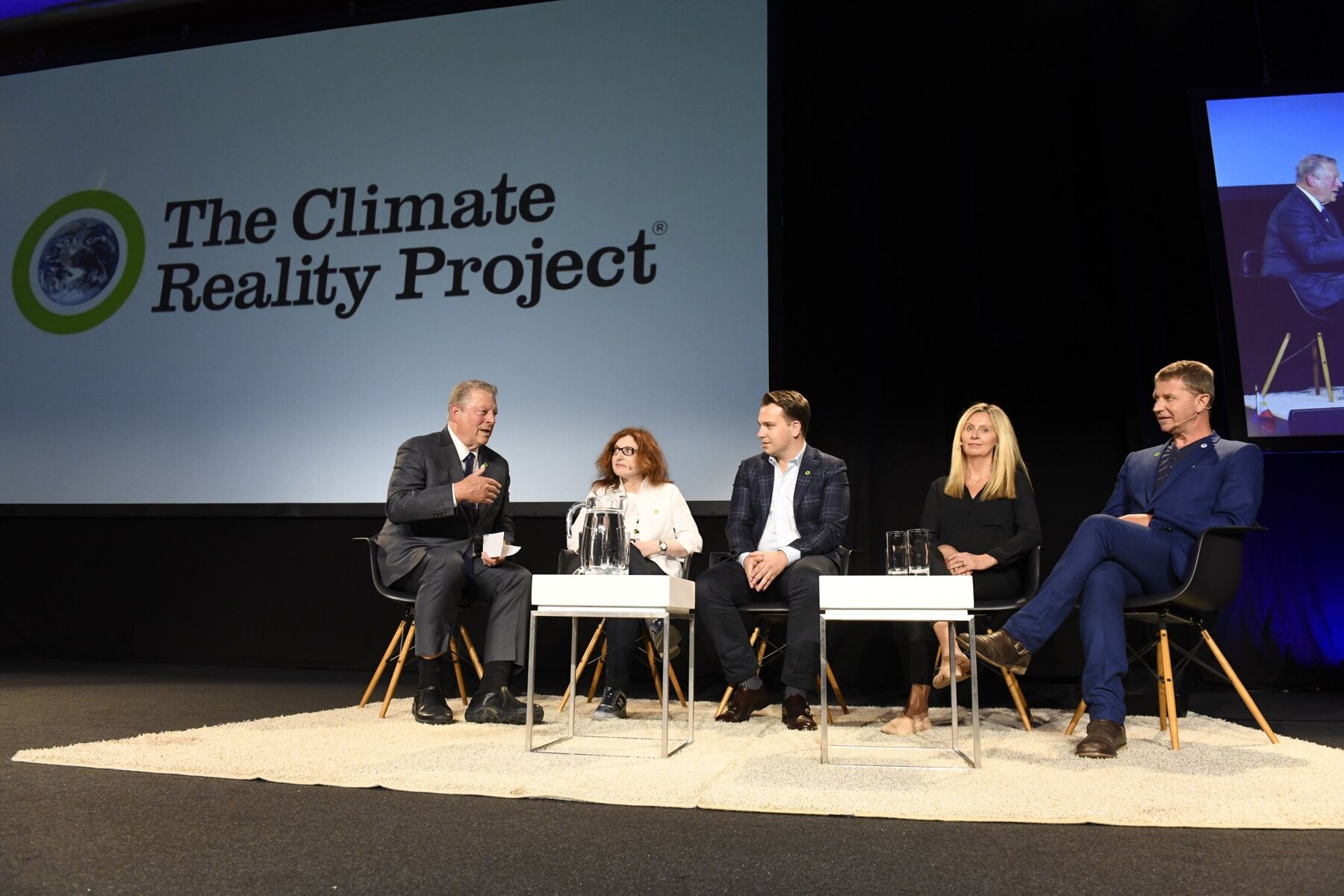
Exactly five years later, on 28 June 2018, The Climate Reality Project came to Berlin. I was invited to join a panel on entrepreneurship and climate leadership, in conversation with Al Gore. Sitting there was a deeply personal full-circle moment: the person whose work had helped plant the seed was now asking how entrepreneurs could turn urgency into action.
Mission changes what a company is capable of
A real mission is not the paragraph on the first slide of a pitch deck. It is a shared answer to three questions: what problem are we here to solve, for whom and why are we willing to keep going when the easy route disappears?
At Soly, the mission helped us recruit people who wanted more than a job. It gave meaning to difficult work, connected colleagues across markets and made customers part of a broader transition. Many Solyans later joined Climate Reality training themselves. That mattered because the mission no longer belonged only to the founders; it had become part of the culture.
Mission also creates strategic energy. If you genuinely believe sustainable energy should be accessible to everyone, you start looking differently at pricing, financing, technology and customer experience. The problem becomes an innovation brief. Purpose can therefore be commercially powerful—not despite being idealistic, but because it forces the company to solve something meaningful at scale.
What mission can—and cannot—do
It can create focus
A mission is useful when it improves decisions. It helps a company say no to opportunities that look attractive but move it away from the problem it exists to solve. It aligns product, brand, capital and talent around a direction larger than a quarterly target.
It can attract resilience
Mission-driven companies often ask a great deal from their people. Growth, uncertainty and change are demanding. A shared purpose does not remove that pressure, but it can make the effort feel worthwhile. People persevere because they understand what their work contributes to.
It cannot replace product-market fit
Customers do not buy a mission alone. They buy a product that solves a real problem at the right price, with a level of trust and service that makes the decision worthwhile. Positive impact becomes durable only when the customer proposition is strong enough to compete.
It cannot excuse weak governance or cash control
This is one of the most important lessons I carry forward. A meaningful mission does not protect a company from poor decisions, misaligned interests, weak reporting or running out of cash. In fact, the stronger the mission, the greater the responsibility to build an organisation capable of protecting it.
It cannot guarantee alignment
Founders, employees, boards and investors may all support the same headline mission while having different time horizons, risk appetites and definitions of success. Alignment must be made concrete—in strategy, governance, incentives and the decisions that matter when pressure rises.
Mission and commercial strength belong together
There is a persistent idea that impact and commercial discipline sit on opposite sides of the table. I believe the opposite. If the impact depends on continuous grants, favourable conditions or founder sacrifice, it remains fragile. A commercially strong model can fund innovation, attract talent, serve more customers and survive long enough to matter.
That was always the entrepreneurial promise behind Soly: make the better choice more accessible, easier and economically attractive. The bigger the company became, the more households could participate in the energy transition.
But scale also raises the standard. More people, capital and countries create more stakeholders and more complexity. Mission must then be supported by a clear operating system: leadership, decision rights, cash discipline, comparable KPIs and governance that protects both the company and its purpose.
A practical test for mission-driven founders
I now test a mission against six questions:
- Is the problem specific and important? A mission should name a change the company can meaningfully influence.
- Does solving it create real customer value? Impact must be connected to a proposition people actively choose.
- Does it guide difficult decisions? If every strategic option fits the mission, the mission is too broad to be useful.
- Can the business model fund the mission? Gross margin, cash and repeatability are part of impact—not distractions from it.
- Are capital and governance aligned with the time horizon? The people around the table must understand what the mission requires under pressure.
- Can the organisation measure both progress and impact? Belief matters, but it should be supported by evidence and accountability.
Looking back, I remain grateful for every colleague, customer, supplier, partner and stakeholder who helped turn an idea planted by a documentary into a company with real reach. The journey also taught me that protecting a mission requires more than passion. It requires the courage to build strong teams, make disciplined choices, welcome challenge and stay in control of the fundamentals.
The world has no shortage of important problems. We need entrepreneurs ambitious enough to take them on—and pragmatic enough to build companies that can keep doing so for decades.
Patrick van der Meulen
Founder & Operating Partner